Understanding FF&E and OS&E: A Guide with FAQ
If you've spent any time around a hotel project, you've probably heard someone toss around "FF&E" or "OS&E" like everyone in the room already knows what they mean. Sometimes they do. Sometimes they're just nodding along, hoping no one asks a follow-up question. But these two acronyms show up constantly in hotel development, from early planning meetings to the final walkthrough before opening day, and they get used so casually during the hotel procurement process that it's easy to assume everyone's on the same page.
The terms sound similar, cover some genuinely overlapping ground, and don't come with a universal cheat sheet taped to the wall of every job site. This guide breaks down both terms, what falls under each one within the hotel supply chain, and answers a few common questions along the way. And hey, if you do end up printing this out and taping it next to your desk, no judgement. Mine stayed up for months.
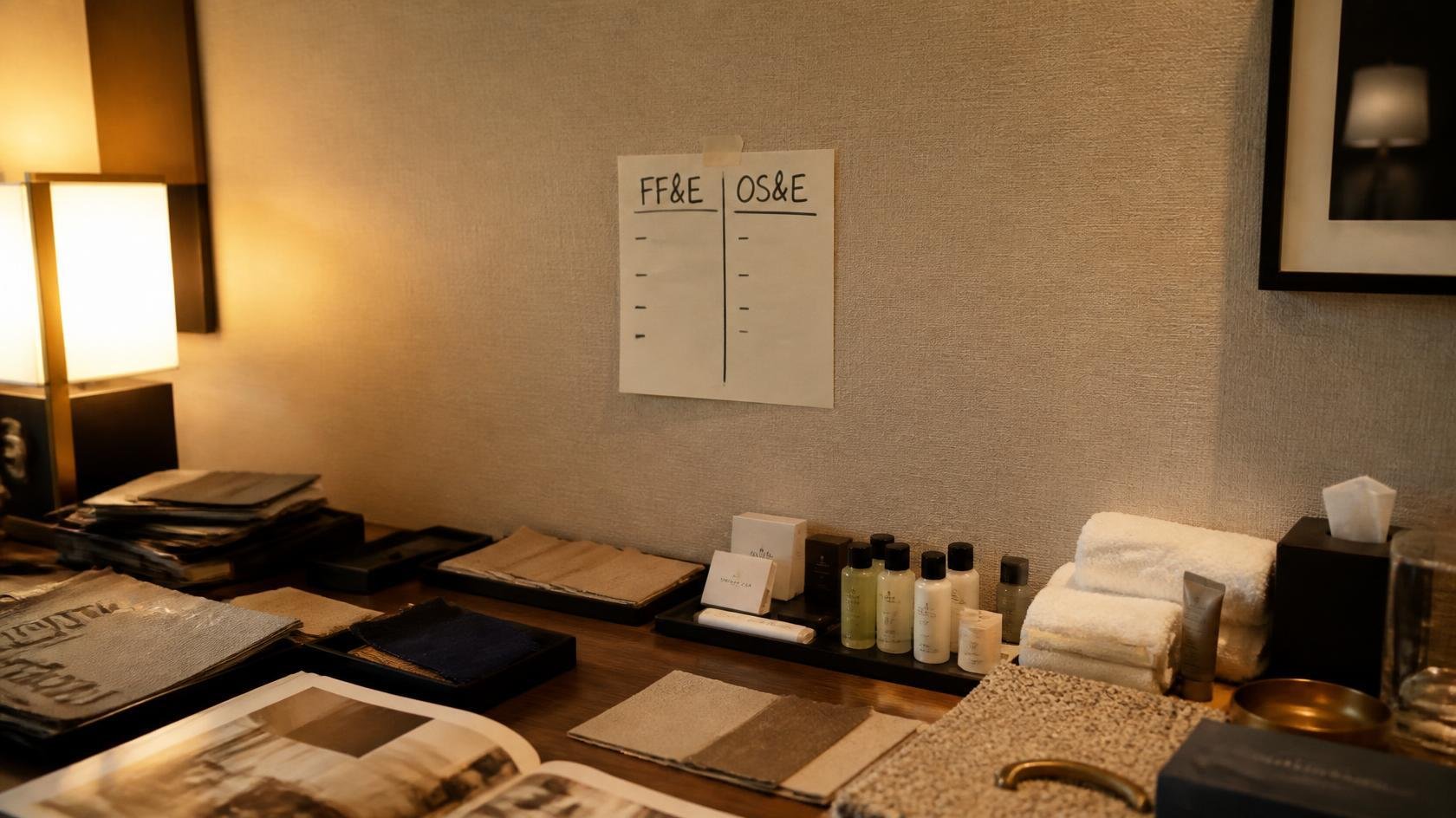
What Is FF&E?
FF&E stands for Furniture, Fixtures, and Equipment. It covers the heavier, movable items that aren't permanently built into the property but are still essential to how it functions day to day. Think beds, sofas, desks, dining tables, and lighting fixtures. These are typically long-term assets, meaning a hotel isn't replacing them every season, or ideally, every guest checkout.
FF&E tends to come into play early in a hotel project. It's most relevant during the planning phase, when flooring and furniture providers get involved, and again during construction and pre-opening, as items actually get installed. Here are some samples of what fall into this category, organized by area:
-
Guest rooms: beds, nightstands, wardrobes, desks, chairs, flooring, and mirrors
-
Fixtures: built-in kitchen counters, bathroom vanities, shower enclosures, artwork, curtains, and staircases
-
Lobby and public areas: reception desks, armchairs, and coffee tables
-
Restaurants and bars: dining tables, bar stools, and wine racks
-
Outdoor spaces: patio furniture and loungers
-
Spa and gym: massage tables and fitness equipment
Basically, if you tried to pick it up and move it to another hotel, and it would take at least two people and a dolly, it's probably FF&E.
What Is OS&E?
OS&E stands for Operating Supplies and Equipment. Unlike FF&E, these items aren't long-term assets. They're the smaller, everyday products that support daily operations and get used, replaced, and restocked on a regular basis. This is the stuff that runs out, gets used up, or occasionally walks off with a guest in their suitcase (we’ve all done it).
OS&E becomes especially relevant during the pre-opening phase, when a hotel is stocking up on tableware and other operational items, as well as during construction. Here's a sample of what falls into this category:
-
Guest rooms: bed linens, towels, toiletries, hangers, mini fridges, coffee machines, and safes
-
Kitchen: dishware, utensils, and glassware—everything from water glasses to champagne flutes
-
Housekeeping: cleaning carts, vacuum cleaners, laundry bags, and cleaning chemicals
-
Public areas: signage, decorative vases, and guest umbrellas
-
Spa and recreation: robes, slippers, pool towels, and loungers
The easiest way to think about the difference: FF&E is what stays. OS&E is what gets replenished.
%2c%20other%20half%20showing%20operating%20supplies%20(towels%2c%20toiletries%2c%20glassware)%20neatly%20arranged%2c%20clean%20minimal%20backgrou.jpg?width=1680&height=944&name=Split-image%20style%20photo_%20one%20half%20showing%20a%20modern%20hotel%20room%20furniture%20setup%20(bed%2c%20nightstand%2c%20chair)%2c%20other%20half%20showing%20operating%20supplies%20(towels%2c%20toiletries%2c%20glassware)%20neatly%20arranged%2c%20clean%20minimal%20backgrou.jpg)
Frequently Asked Questions
Do FF&E and OS&E ever overlap?
Yes, and it's one of the bigger gray areas for project managers, accountants, and procurement teams. The same item can land in either category depending on its lifespan, cost, or how a company sets its accounting rules. A few common examples: hairdryers and coffee makers, which get filed as FF&E by some companies and OS&E by others; lamps, which are technically FF&E but sometimes get bundled into OS&E if they're on the cheaper end and easily replaced; and mattress pads, which stick to housekeeping's OS&E budget even though the mattress itself is FF&E.
Which one matters more for budgeting?
Both matter, just at different points. FF&E usually represents a larger upfront investment tied to construction and design, while OS&E is an ongoing operational expense that continues well after opening day.
Who typically manages each category?
FF&E is often handled by designers, architects, and furniture suppliers working closely with the project timeline. OS&E is generally managed by procurement and operations teams, since it's tied more closely to daily hotel functions than to the building itself.
Why does the distinction matter?
Mixing up the two can create budgeting headaches and procurement delays. Knowing which category a product belongs to helps hotel teams plan purchasing timelines correctly and avoid scrambling for towels three days before opening.
For a hotel supplier, does it matter which category a product falls into when pitching to a hotel?
It can. FF&E purchases are usually tied to the construction and design timeline, while OS&E purchases happen closer to opening and repeat on an ongoing basis. Knowing which category a product falls into helps a supplier figure out who to pitch to and when, rather than showing up at the wrong stage of the project.
If a luxury hotel suffered a sudden zombie apocalypse, which category would save your life?
Honestly, I myself am torn. It’d be tempting to reach for that OS&E chef’s knife or to wrap up in heavy linens for bite protection. But it would also be tempting to use those heavy FF&E mahogany desks and wardrobes to barricade the doors.